リソースのトップに戻る

モバイルゲームの収益を飛躍的に伸ばす16種類の報酬付き動画広告

January 7, 2026

セクションにジャンプ...

モバイルゲーム業界の最新動向や業界リーダーの格言を詰め込んだニュースレターをぜひご購読ください!

購読する
パブリッシャー向け

When thinking about rewarded video ads (one of the most common formats leveraged in rewarded advertising), it’s easy to brush over just how many types of them exist. 

For this reason, when you start thinking about this, you may end up surprised. Our research has shown us that there are 16 different types of rewarded video ads that can be found in mobile games.

It’s not even the whole list.

In the list below, you’ll learn about the most common types of rewarded video ads we’ve seen in popular games, as well as the pros, cons, and best practices of each rewarded video ad format. 

それでは、詳しく見ていきましょう。

👀 Related reading: What is rewarded advertising and why does it work?

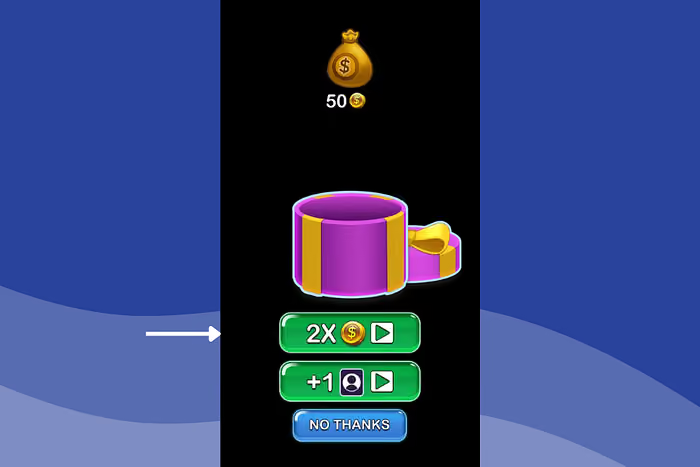
1. End-of-level multiplier ads

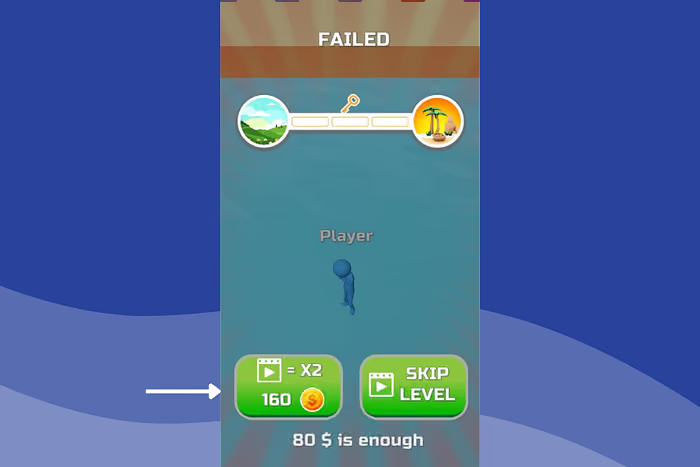
The end-of-level multiplier in Bridge Race types of rewarded video ads
The end-of-level multiplier in Bridge Race

The end-of-level multiplier is one of the most common types of rewarded video ads used in mobile games.

🔍 What is it?

An end-of-level multiplier lets players double (or multiply) the reward they've just earned by watching a rewarded video ad. The placement appears right after they complete a level – when they're feeling accomplished and the reward is top of mind.

✅ Why it works

Players have just experienced a win. At this moment, the idea of multiplying their earnings feels like a natural, friction-free exchange: a few seconds of watching an ad for a tangible boost to their progress. This contextual placement is highly engaging across all skill levels.

✍️ Best practices

  • Display the multiplier option immediately after level completion, before players navigate away
  • Make the multiplied reward amount clearly visible (e.g., "2x your earnings")
  • Test different multiplier values (2x, 3x, 5x) to find your optimal conversion rate
  • Monitor impact on session duration and daily active users (DAU)

Suitable for: All games split into levels, missions, or stages.

2. Out of lives or energy offer ads

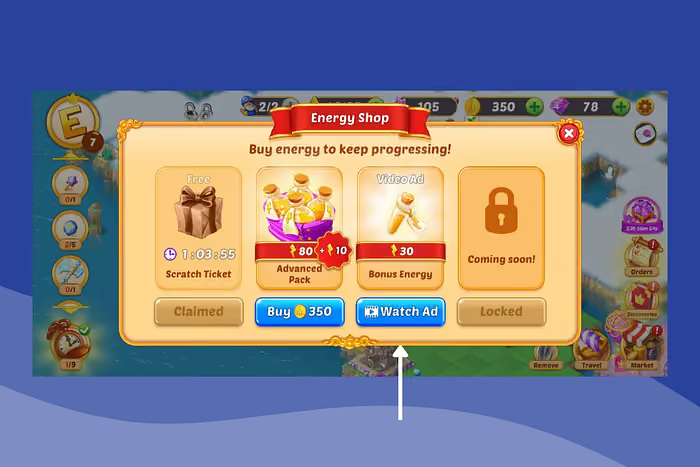
Out of energy rewarded video ad in EverMerge
Out of energy ad in EverMerge

🔍 What is it?

Casual games often limit player sessions with an energy or lives mechanic. Once players run out, they hit a wall: exit the game, wait for a refill, or spend real money. Out-of-lives ads offer a third option—watch an ad to restore energy or revive.

✅ Why it works

Players are invested in continuing their session. Rather than leaving frustrated, they'll watch an ad if it means staying in the game. This placement also reduces friction that might otherwise push them to spend on in-app purchases.

✍️ Best practices

  • Limit the number of times players can use this per session (e.g., 3-5 times) to protect IAP revenue
  • Pair it with a cooldown timer so players don't abuse it
  • Test messaging around "Continue playing" vs. "Get more energy" to see what resonates
  • Track the impact on IAP conversion to ensure you're not cannibalizing purchases

Suitable for: Casual games with energy or life mechanics (puzzle games, match-3s, farming sims).

3. Extra currency ads

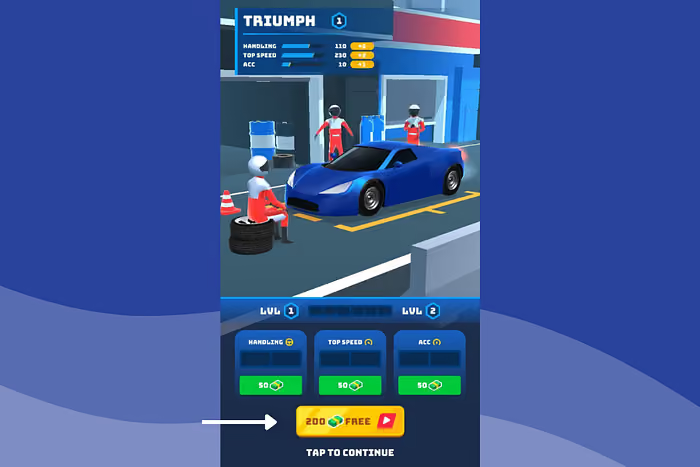
Extra currency ad in Race Master 3D

🔍 What is it?

This is one of the most basic examples of rewarded video ads, and is a straightforward value exchange: players watch an ad and receive soft currency (or sometimes hard currency). These placements often appear as surprise pop-ups, but the timing and frequency are strategically controlled by the developer.

✅ Why it works

The mechanic is simple and easy to understand, making it accessible to all players. Since currency is central to game progression, players perceive the reward as valuable.

✍️ Best practices

  • Decide upfront whether you're offering soft or hard currency, and in what amounts
  • Use strategic pop-up timing rather than random intervals—consider showing it when players are low on funds or between gameplay sessions
  • Balance reward amounts so they feel generous but don't disrupt your game economy
  • Track currency velocity and inflation to maintain healthy progression curves

Suitable for: All games where in-game currency is central to the economy, such as Social Casino and Puzzle games. 

4. Second chance ads

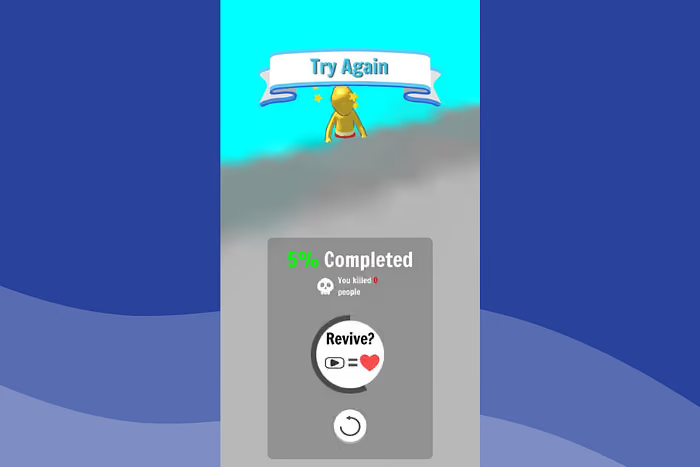
Extra currency ad in Race Master 3D types of rewarded video ads
Second chance ad in Aquapark.io

🔍 What is it?

A second chance ad appears when players hit a "game over" screen. Instead of ending their session, they can watch an ad to revive, retry the level, or restart from their failure point.

✅ Why it works

Nobody wants to see the game over screen. For players, a few seconds of watching an ad is a small price for getting back into the action, as they're emotionally invested in continuing and willing to trade time for progress.

✍️ Best practices

  • Offer the second chance option immediately, before the game over screen fully loads
  • Test different revival mechanics: full health restore, return to checkpoint, or restart the level
  • Limit availability per session (e.g., 2-3 second chances) so it doesn't trivialize game difficulty
  • Monitor difficulty drop-offs to see if second chances are addressing genuine pain points or enabling over-reliance

Suitable for: Games with "out of action" mechanics (endless runners, action-arcade games).

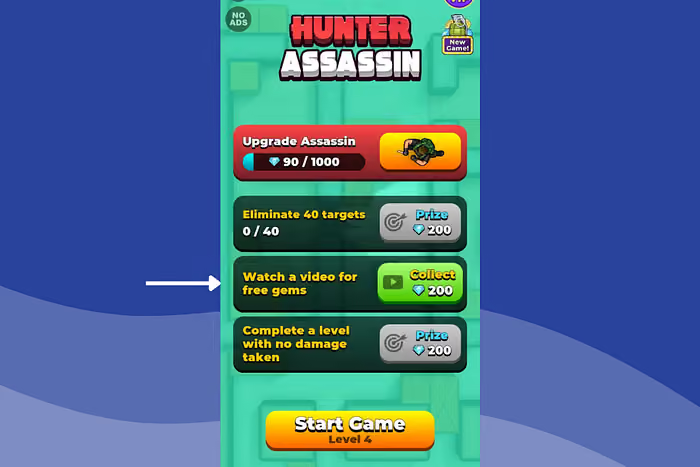
5. Home screen ads

Home screen rewarded video ads
Home screen ad in Hunter Assassin

🔍 What is it?

A rewarded video ad placement positioned prominently on the game's home screen. It's one of the highest-visibility placements, always available to players whenever they return to the main menu.

✅ Why it works

Home screen visibility means virtually every player will see it. New players get introduced to the value exchange early, while engaged players know they can return here anytime they're short on resources.

✍️ Best practices

  • Keep the home screen ad offer clear and concise to let players know exactly what they'll earn
  • Test whether a static button or a rotating banner drives more engagement
  • Refresh the reward or messaging periodically to prevent ad fatigue
  • Monitor session duration to see if home screen ads boost time spent in-game

Suitable for: All mobile game genres, though the reward types will vary (currency, energy, cosmetics).

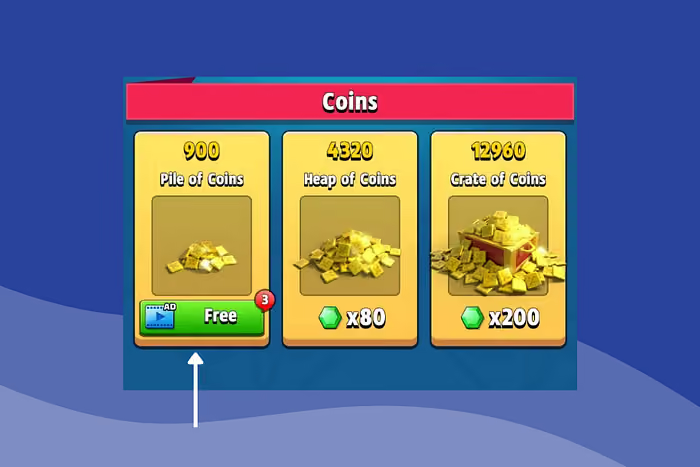
6.In-game store ads

rewarded video ads in the In-Game Store
In-game store ads in Archero

🔍 What is it?

Rewarded video ads appear within the game's store, offering players a way to sample IAP items without spending real money. Players can watch an ad to claim a limited-time offer or a smaller version of a premium bundle.

✅ Why it works

Engaged players visit the store specifically because they want something like more currency, energy, or cosmetics. Instead of leaving empty-handed, they get to experience what a purchase would feel like. This can actually warm them up to spending later.

✍️ Best practices

  • Treat store ads as samples for IAP offers, not replacements
  • Show 1–2 free offers per store visit, spaced out
  • Feature cosmetics or time-limited bundles rather than core progression items
  • Measure how store ads influence subsequent IAP conversion within 24 hours and 7 days

Suitable for: Any game with an in-game store.

7. Ads that decrease wait times

🔍 What is it?

Wait timers appear when players unlock features, refill energy, or craft items. Ads-to-skip-wait placements let players speed up the timer by watching a rewarded video.

✅ Why it works

Wait timers are a point of friction and break the flow of gameplay. Players see opting into a rewarded video to bypass the wait time as the least frustrating alternative to abandoning the game or spending money.

✍️ Best practices

  • Clearly show how much time the ad will skip (e.g., "Skip 2 hours" vs. generic "Skip")
  • Limit how many times players can use this per day (to protect IAP spend)
  • Use it for timers that are genuinely annoying (4+ hours) rather than short ones (30 seconds)
  • Test different skip amounts—sometimes skipping to completion is overkill; a 50% reduction might drive better retention

Suitable for: All games with wait timers (simulation games, city builders, casual games).

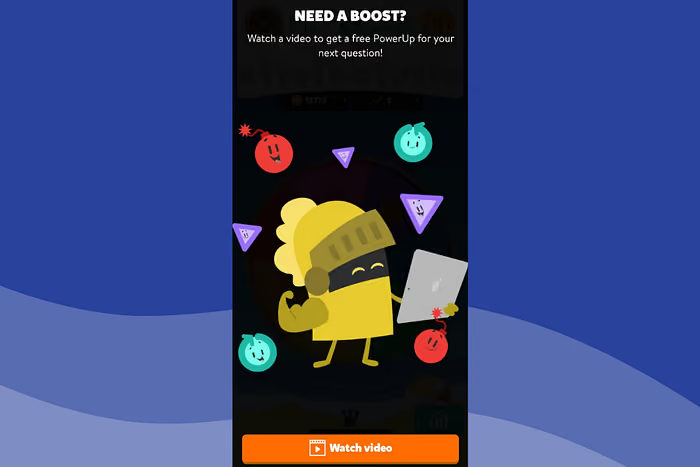
8. Power-up ads

Power-up Ads
Power-up ad in Trivia Crack

🔍 What is it?

Players watch an ad to earn booster or power-up items that help them progress faster or overcome difficult levels. These are typically items that can also be purchased, but are offered free as an ad reward.

✅ Why it works

Players stuck on difficult content are most receptive to help. Offering it for free (via an ad) is less frustrating than forcing a purchase decision and keeps players engaged longer.

✍️ Best practices

  • Show power-up ads right before difficult levels or when players get stuck (failed attempts increase receptivity)
  • Limit to one power-up ad per session to avoid trivializing challenge
  • Track which power-ups are most claimed to understand which difficulty spikes need addressing
  • Test whether offering weaker power-ups more frequently or stronger ones rarely drives better retention

Suitable for: Games across genres that feature boosters or power-ups (puzzle, match-3, action).

9. Daily reward multiplier

Daily Reward Multiplier
Daily reward multiplier in Trivia Star

🔍 What is it?

Daily login rewards are a classic retention tool. A daily reward multiplier lets players double the day's reward by watching a rewarded video ad.

✅ Why it works

Players come back daily to claim their reward anyway. The option to double it gives them an incentive to stay engaged with the app longer and creates a high-engagement monetization moment.

✍️ Best practices

  • Make the multiplied reward amount prominent and exciting
  • Test 2x vs. higher multipliers (3x, 4x) to see what drives the highest watch rate without feeling greedy
  • Ensure the base daily reward is valuable enough that multiplying it feels worthwhile
  • Track DAU lift and day-to-day retention improvements

Suitable for: All game genres.

👀 Related reading: How to use daily login rewards to drive engagement & retention in your mobile game

10. Offline earnings multiplier

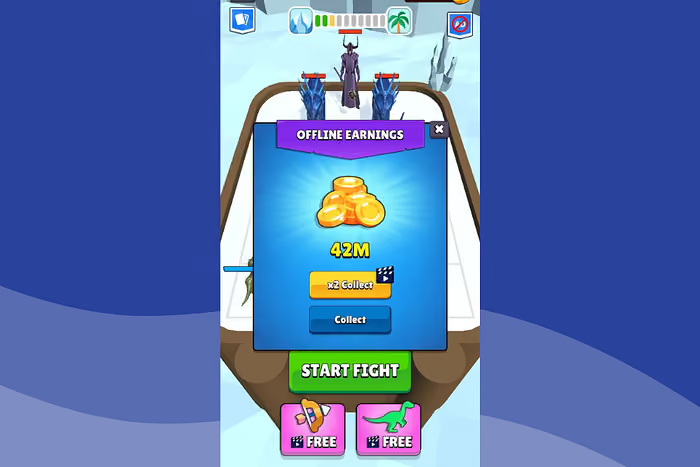
types of rewarded video ads: Offline Earnings Multiplier
Offline earnings multiplier in Merge Master – Dinosaur Fusion

🔍 What is it?

In many games, players earn currency or items passively while away from the game. An offline earnings multiplier lets them double (or multiply) those earnings by watching an ad when they return.

✅ Why it works

Players experience a dopamine hit from logging in and seeing offline earnings waiting for them. Doubling that hit by watching a quick ad feels like a natural, rewarding exchange.

✍️ Best practices

  • Show the offline earnings and the multiplied amount side-by-side so the value is obvious
  • Make this placement one of the first things players see when they launch the app
  • Test cooldown timers—should this be available every session or once per day?
  • Measure how it impacts launch frequency and session length

Suitable for: Games with passive and AFK (“away from keyboard”) earning mechanics, like idle games and simulation games.

11. IAP discount ads

🔍 What is it?

Players see an IAP offer at full price, then are offered the same item at a discount if they watch a rewarded video ad.

✅ Why it works

This targets indecisive player who are interested enough to look at an offer but hesitant to spend. The discount, combined with the gamified element of "unlocking" it via an ad, nudges them toward conversion.

✍️ Best practices

  • Introduce this placement relatively early in the game so players learn about it before they've decided they won't spend
  • Test discount depths (10%, 25%, 50%) to find the threshold that drives spending without eroding margins
  • Feature high-value bundles rather than single items
  • Measure incremental revenue lift and compare conversion rates with and without the discount ad

Suitable for: Any game with in-app purchases.

12. Random reward ads

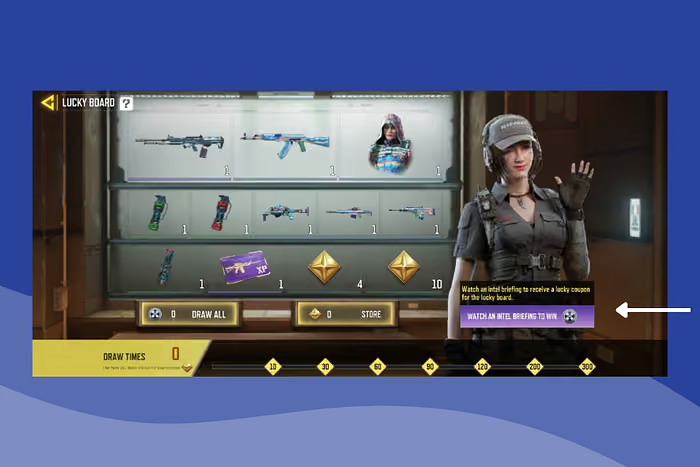
Ads That Bring Random Rewards
Ads that bring random rewards in Call of Duty: Mobile

🔍 What is it?

Instead of showing players exactly what they'll earn, random reward placements use gamified features – lucky wheels, mystery boxes, scratch cards – to make the reward feel like a surprise.

✅ Why it works

Uncertainty and variable rewards are psychologically engaging. Players get hooked trying to win "the big prize" and often watch multiple ads in one session.


✍️ Best practices

  • Weight the probability distribution fairly as players will feel cheated if big rewards are impossible
  • Show the reward immediately after the ad completes so the excitement doesn't fade
  • Use this for engaged players rather than showing it to everyone – it works best when players are already invested
  • Monitor watch-through rates and compare to guaranteed reward placements to ensure this drives higher engagement

Suitable for: Games with engaged userbases across various genres.

13. Free character ads

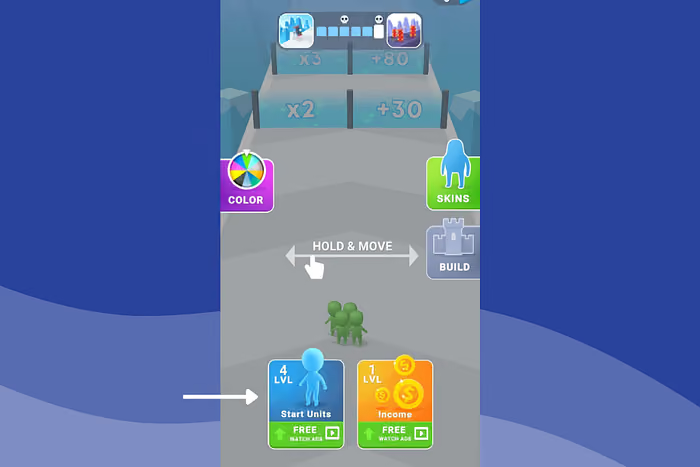
types of rewarded video ads: free character ads
A “free character ad” in Count Master: Crowd Runner

🔍 What is it?

Players watch an ad to unlock a new character, skin, or cosmetic item, typically something that can also be purchased through the IAP store.

✅ Why it works

Character collections are emotionally engaging. Players are willing to watch ads to expand their collection, especially if the character is visually appealing or functionally useful.

✍️ Best practices

  • For gameplay-impacting characters, show this ad at the right moment (e.g., when players are about to attempt difficult content)
  • For cosmetic-only characters, reserve this for highly engaged players to avoid overwhelming new players
  • Rotate which characters are available as free ads to maintain freshness
  • Track which characters drive the highest claim rates as this tells you what your players actually want

Suitable for: All games with character collection systems (gacha games, RPG and Strategy games). 

14. In-game hints

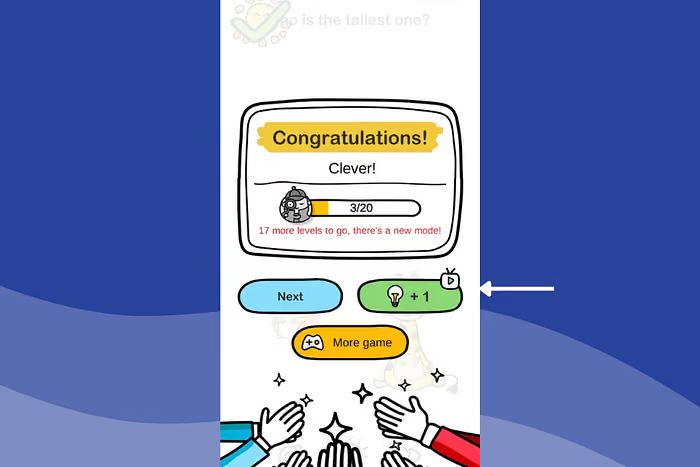
In-game Hints rewarded video ads
Ads that bring in-game hints in Brain Out

🔍 What is it?

Brain training and puzzle games can get tough. An in-game hint ad lets players get free assistance (a clue, partial solution, or hint) by watching a rewarded video.

✅ Why it works

Stuck players face a choice: quit the game, spend money for a hint, or watch an ad. A free ad-supported hint keeps them in the game and prevents frustration-driven churn.

✍️ Best practices

  • Track hint usage patterns to identify which levels or puzzle types are frustration hotspots
  • Limit hints per session (e.g., 2-3) so players don't rely on them to skip thinking
  • Make hints genuinely helpful, as a vague clue isn't worth watching an ad for
  • Test whether showing hints proactively ("Stuck? Watch an ad for a hint") vs. reactively (waiting for the player to ask) drives better retention

Suitable for: Puzzle, brain training, word, and trivia games.

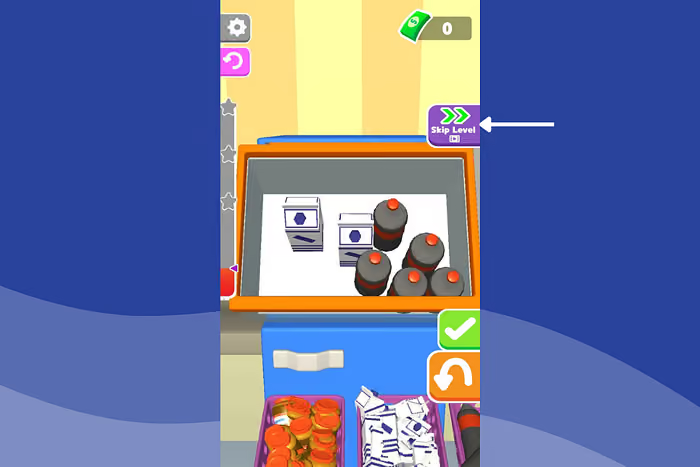
15. Skip level ads

Skip Level Ads
A “skip level” ad in Fill The Fridge

🔍 What is it?

With this rewarded video ad placement, players can watch an ad to skip a level entirely and move to the next one.

✅ Why it works

Players skip levels for different reasons such as difficulty, boredom, or just wanting to progress faster. Offering this as an ad-funded option keeps them from abandoning the game when they hit a wall.

✍️ Best practices

  • Limit availability to avoid trivializing your level design (e.g., allow skipping only on harder levels or after a player has failed multiple times)
  • Add a cooldown timer between skips (e.g., one skip every 10 minutes of gameplay)
  • Use level drop-off data to identify which levels need skipping – this can also signal difficulty balancing issues
  • Measure whether skip ads increase retention or create long-term engagement issues

Suitable for: Hyper-casual games or RPG and Strategy games split into levels.

16. Ad removal offers

🔍 What is it?

A meta but effective placement option is one where players can remove in-game banner or interstitial ads by watching rewarded video ads instead.

✅ Why it works

Some players are frustrated by ads to the point of considering uninstalling. This gives them an alternative: trade a few rewarded video ads now to improve their experience later. It's a surprisingly effective engagement driver for ad-averse players.

✍️ Best practices

  • Require players to watch multiple rewarded ads to unlock ad-free play – they compensate for your lost ad revenue through their engagement
  • Test the unlock threshold: how many ads should they watch? (typically 3-5)
  • Consider whether this should be a one-time unlock or recurring (e.g., ad-free for 24 hours per day)
  • Track uninstall rates and session length for players who unlock this – does removing ads improve retention?

Suitable for: Games monetizing with a mix of banner, interstitial, and rewarded video ads.

👀 Related reading: An overview of subscription-based mobile game monetization

Final thoughts on rewarded video ads

The right rewarded video ad placements do more than hit your revenue targets. They maximize retention and engagement while keeping your players' experience in mind.

These 16 ad placement options are a foundation to learn from, and your game will have unique moments where rewarded video ads fit naturally into the player journey. The key is testing and iterating: see what your players respond to, monitor the impact on retention and IAP revenue, and refine from there.